

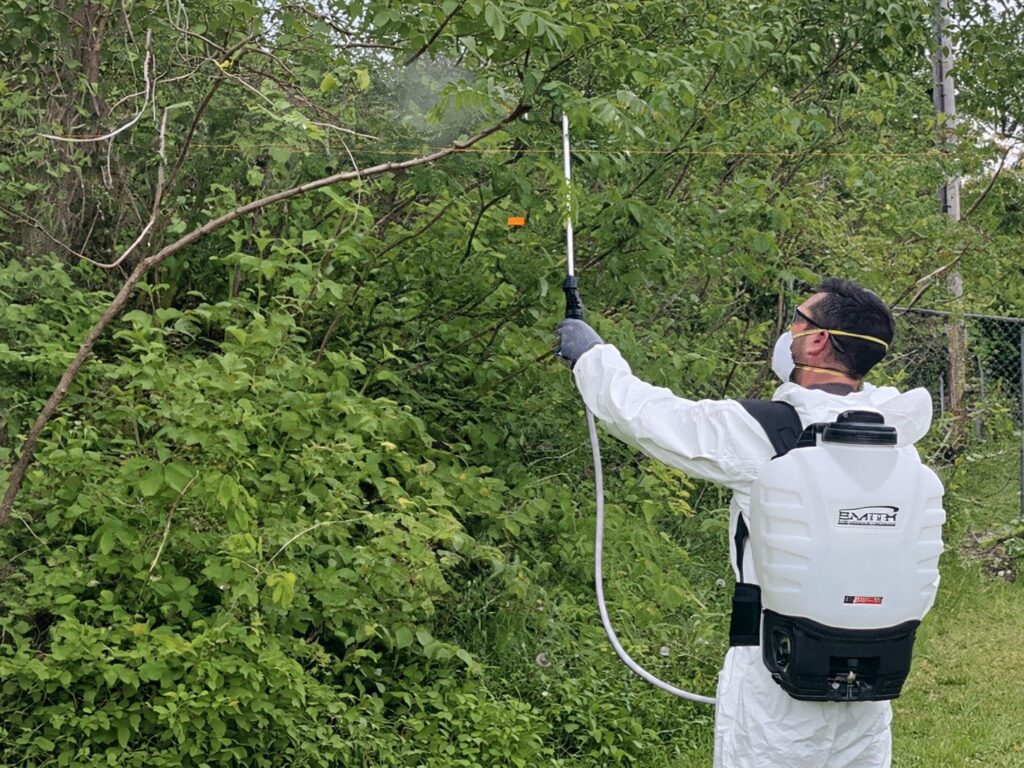
Finding the right backpack sprayers for landscaping professionals can make or break your fall pre-treatment season. You need equipment that holds up through daily use, resists chemical wear, and keeps your crew comfortable on long routes. Our backpack sprayer reviews walk you through the top options built for landscaping and turf work in 2026.
Landscaping businesses in Georgia, Ohio, and beyond face the same fall crunch every year. A sprayer that leaks, clogs, or wears out mid-season costs you money in downtime and wasted product. You will learn which features matter most, which models perform best, and how proper application protects your investment.
Why Landscaping Professionals Need a Purpose-Built Backpack Sprayer
Landscaping crews put more strain on a sprayer than almost any other professional user. You move across uneven turf, climb over curbs, and switch between herbicides, fertilizers, and fungicides throughout the day. A homeowner-grade sprayer will not survive that pace, so backpack sprayers for landscaping professionals need commercial-grade construction.
What Is the Best Backpack Sprayer for Landscapers?
The best backpack sprayer for landscapers combines a leak-proof pump, a padded harness, and chemical-resistant seals in one unit. SMITH® builds models like the SMUBP around these exact priorities for daily commercial use. You get a leak-proof internal pump, steady comfort, and a padded harness built for long shifts.
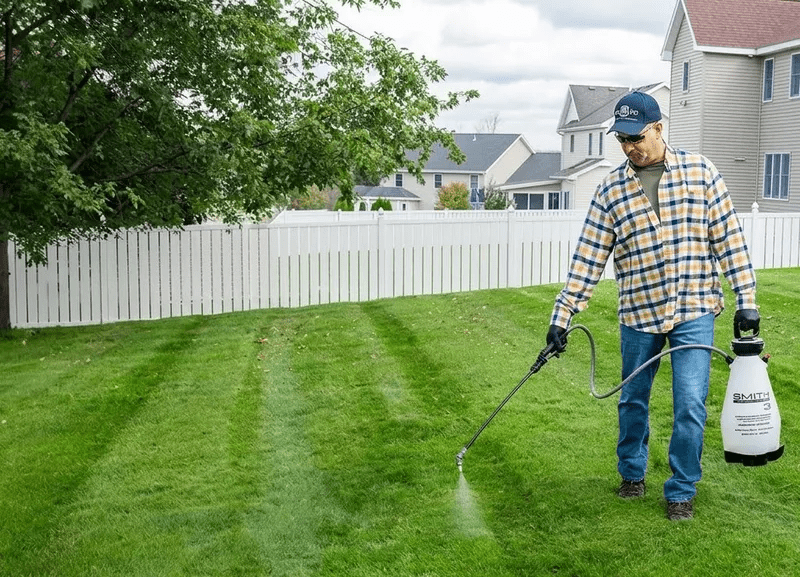
Comfort matters just as much as durability once you factor in eight-hour shifts during peak season. Additionally, a poorly balanced tank shifts weight onto your lower back and slows your pace across large properties.
Common failure points for underbuilt sprayers include:
- Seals that degrade quickly under herbicide exposure
- Pumps that lose pressure within a single season
- Straps that dig into your shoulders during all-day use
- Tanks that crack under UV exposure or cold storage
Professional turf crews replace weak sprayers far more often than they replace properly built equipment. Therefore, the true cost of a cheap unit shows up in repair bills, lost spray time, and inconsistent chemical coverage. See how those hidden costs add up in our breakdown on the true cost of a cheap pump sprayer.
Ultimately, a commercial-grade sprayer solves these problems long before they start costing you money. You get more even spray patterns, longer equipment life, and fewer surprises during busy pre-treatment weeks. Next, browse our turf and agriculture sprayer lineup before you compare specific features side by side.
Key Features to Compare Before You Buy
You cannot judge backpack sprayers for landscaping professionals on price alone, since features drive long-term value. Tank capacity, pump type, and nozzle versatility also affect how much ground your crew covers per fill. Harness design and chemical resistance determine how long the unit lasts under daily commercial use.
Key specs worth comparing include:
- Tank capacity between two and four gallons for most routes
- Piston or diaphragm pump type for your chemical mix
- Adjustable nozzles for spot spray and broadcast work
- Viton seals for herbicide and fungicide resistance
- Padded, reversible harness straps for all-day wear
In fact, pressure consistency affects accuracy more than most buyers realize during a normal workday. According to Ohio State University Extension, travel speed, nozzle choice, and spray pressure all shape application accuracy.
Similarly, warranty terms and repair-part availability matter just as much as day-one performance. A sprayer with fast-access seals and stocked replacement parts keeps your crew working instead of waiting on parts. Meanwhile, a bargain unit with no parts support turns one clogged nozzle into a lost afternoon.
Weigh these features against your actual route size and chemical mix before you commit to a model. Our guide on choosing the right pump sprayer for your industry breaks down options by specific job type. Once you know your priorities, the right model becomes far easier to identify.
Backpack Sprayer Reviews: Top Picks for Landscaping Crews This Season
Several backpack sprayers for landscaping professionals stand out for fall pre-treatment and turf season work. As a result, SMITH® builds models for both manual and battery-powered application, depending on your crew's workflow. Each model balances tank capacity, comfort, and chemical resistance for daily commercial routes.
Standout options for 2025 include:
- SMUBP – 4 Gal. Backpack Sprayer, a no-leak manual pump built for daily comfort and safety
- S2EV – 4 Gal. 18V Vari-Flow Li-Ion Backpack Sprayer, featuring patented FloIQ variable flow technology
- 18V MultiUse – 4 Gal. 18V Li-Ion Backpack Sprayer, delivering up to 4 hours of battery-powered spray time
For example, the SMUBP uses an internal pump design that keeps chemicals from dripping down your back during long shifts. It pairs that leak-proof technology with a thick, padded harness and an adjustable chest strap for comfort. Landscaping crews favor this model for routine spot treatments and smaller properties.
The S2EV and 18V MultiUse remove the need for constant manual pumping across your longest routes. As a result, your crew conserves energy for other tasks like edging, mowing, or bed maintenance.
Match your model choice to your typical job size and the chemicals you apply most often. However, smaller properties often favor the manual SMUBP, while larger routes benefit from the battery-powered S2EV or 18V MultiUse. Browse the full lineup on our backpack sprayer collection page to compare specs side by side.
Turf Application Best Practices for Fall Pre-Treatment Season
Fall pre-treatment season rewards landscaping professionals who calibrate their equipment before the first application. As a result, skipping calibration leads to uneven coverage, wasted product, and inconsistent turf results across your route. A properly calibrated backpack sprayer protects both your budget and your customer's lawn.
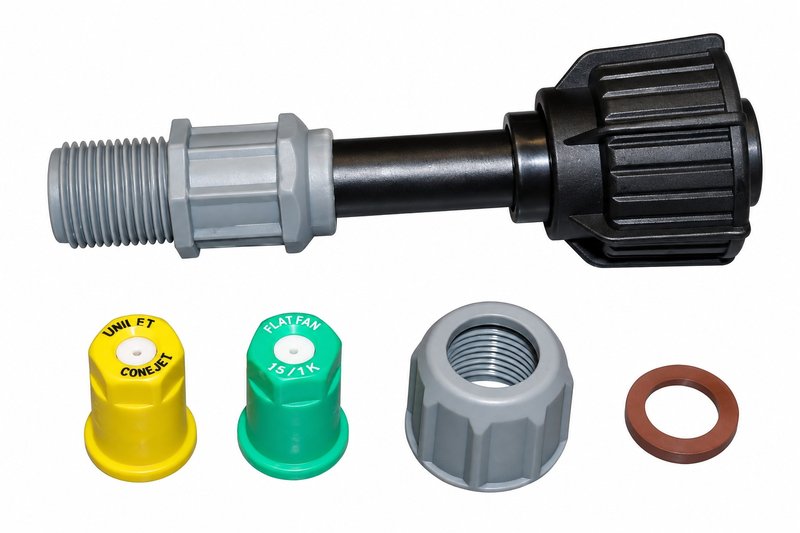
Calibration confirms your sprayer delivers the exact rate listed on the product label. Skipping this step often leads to under-application in some spots and overspray in others.
Follow these steps before every fall application:
- Calibrate your sprayer using clean water before mixing chemicals
- Check nozzles and seals for wear after summer storage
- Maintain a steady walking pace during broadcast application
- Apply during calm wind conditions to avoid drift
- Store the tank fully drained between treatment days
Wind and temperature both affect how far spray drifts beyond your target area. Early morning or late afternoon applications typically reduce drift and improve absorption into turf. For further guidance on keeping your equipment field-ready, see our sprayer maintenance guide.
Overall, fall pre-treatment success depends on the sprayer you choose and how carefully you use it. Landscaping professionals who calibrate, maintain, and store their equipment properly see fewer callbacks and better turf results. Careful execution keeps your fall calendar full and your customers coming back each season.
Find Your Match in the Smith Backpack Sprayer Lineup
Choosing among backpack sprayers for landscaping professionals comes down to matching gear to your actual fall workload. The right unit protects your crew's comfort, your chemical budget, and your customer relationships. SMITH® has built commercial-grade equipment for professionals since 1888, when D.B. Smith invented the first compressed-air sprayer.
You now know which features to compare, which models fit your route size, and how proper calibration protects results. Browse the Smith landscaping backpack sprayer lineup and find your match before fall season peaks. Reach out to our team today, and we will help you build the right fall pre-treatment package for your crew.